
- Your cart is empty
- Continue Shopping

Product

NAD+ (500MG)
-23%


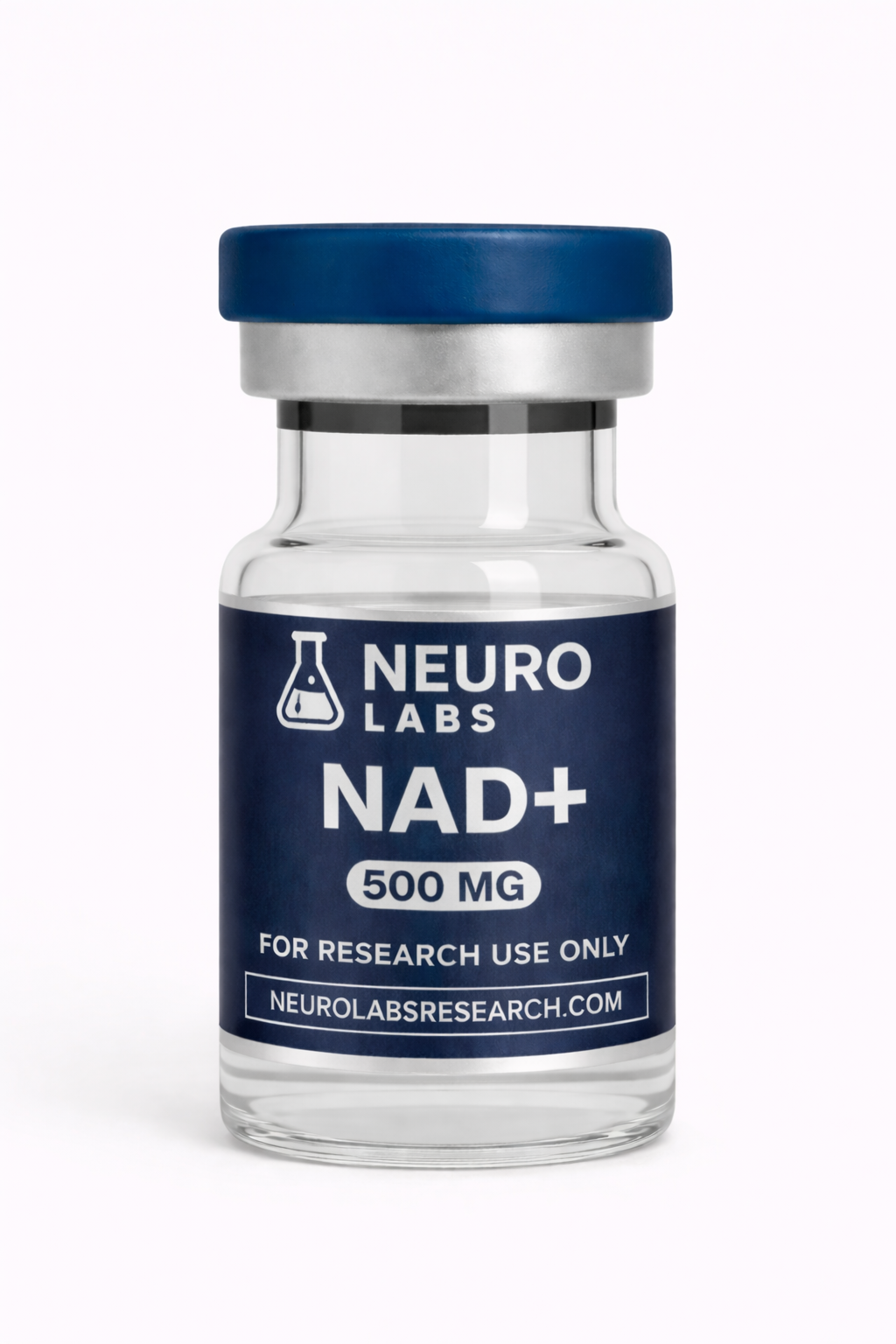
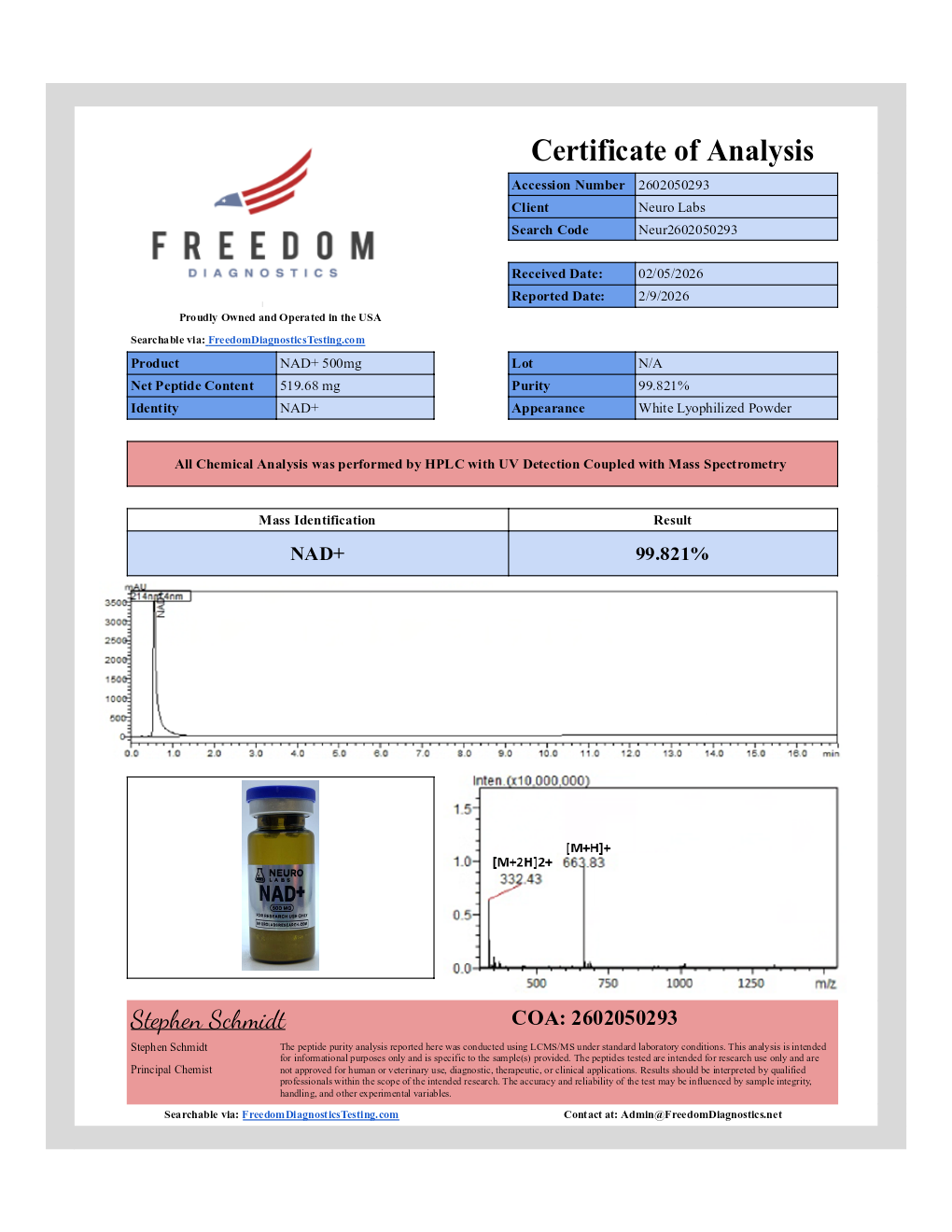
NAD+ (500MG)
$50.00Current price is: $50.00. Original price was: $65.00.
Product Details
Form: Lyophilized powder
Purity: ≥99%
Research Application Guidelines
This material is intended solely for in vitro laboratory research carried out by trained professionals. It is not approved for human or animal use and must not be incorporated into foods, pharmaceuticals, cosmetics, or diagnostic procedures.
Regulatory Notice
This compound has not been evaluated by the FDA and is not intended to diagnose, treat, cure, or prevent any disease. All handling, storage, and experimentation must comply with relevant institutional and regulatory standards.
Purchase & Responsibility Agreement
By purchasing from Neuro Labs, the buyer confirms they are a qualified researcher or authorized laboratory. All sales are final. The purchaser assumes full responsibility for proper handling, legal compliance, and appropriate storage of this material.
Add to cart
Buy Now
NAD+ (500MG) Peptide: Benefits, Uses, and Research Overview
NAD+ (500MG) peptide is a research compound widely studied for its potential role in cellular energy production, metabolic health, and healthy aging science. NAD+, short for nicotinamide adenine dinucleotide, is a coenzyme naturally present in every living cell and plays a critical role in mitochondrial activity and cellular repair pathways. Because NAD+ levels naturally decline with age, researchers continue exploring NAD+ (500MG) peptide applications in energy metabolism, cognitive wellness, and longevity-focused investigations.
At Neurolabs Research, NAD+ products are examined alongside advanced peptide and wellness compounds intended for scientific and laboratory applications.
What Is NAD+ (500MG) Peptide?
NAD+ is a coenzyme essential for hundreds of biological reactions connected to energy production and cellular communication. Researchers study NAD+ because it helps cells convert nutrients into usable energy through mitochondrial activity. Furthermore, NAD+ supports enzymes associated with DNA repair, oxidative balance, and metabolic regulation.
Because declining NAD+ levels may affect cellular performance over time, scientists continue investigating supplementation and peptide-related applications. As a result, NAD+ (500MG) has become increasingly important in wellness and longevity research.
Potential Benefits of NAD+ (500MG) Peptide
Cellular Energy Research
Researchers frequently investigate NAD+ for its potential influence on ATP production and mitochondrial function. Consequently, it has become a major focus in energy metabolism and wellness-related science.
Healthy Aging Studies
NAD+ levels naturally decrease with age. Therefore, researchers continue exploring NAD+ peptide applications in healthy aging and cellular resilience investigations.
Cognitive and Neurological Research
Because brain cells require substantial energy for proper function, scientists study NAD+ for its possible role in cognitive performance and neurological support. Furthermore, ongoing research continues examining its influence on brain signaling pathways.
Metabolic and Recovery Research
Studies suggest NAD+ may support pathways connected to metabolism and cellular recovery. As a result, researchers continue exploring its applications in metabolic performance and wellness science.
How NAD+ Works
NAD+ functions as a coenzyme involved in electron transfer during cellular energy production. Specifically, it supports mitochondrial processes that generate ATP, the primary energy source used by cells.
Moreover, NAD+ interacts with enzymes such as sirtuins and PARPs, which are associated with DNA repair and cellular maintenance pathways. Because of these mechanisms, researchers continue studying NAD+ in longevity and metabolic investigations.
To learn more about advanced peptide and wellness compounds, visit the Neurolabs Research peptide collection.
Common Research Applications
- Cellular energy production research
- Healthy aging investigations
- Cognitive and neurological studies
- Metabolic performance research
- Mitochondrial and cellular repair science
Additionally, scientific resources such as the National Center for Biotechnology Information and PubMed continue publishing research related to NAD+ and cellular metabolism.
Storage and Handling
NAD+ products are commonly supplied in powder or solution form depending on the research application. Therefore, proper storage is essential for maintaining compound stability and research quality. Most products should remain in a cool, dry environment and handled according to supplier recommendations.
Conclusion
NAD+ (500MG) peptide is a promising research compound studied for its potential effects on cellular energy, metabolic function, and healthy aging. Because NAD+ plays a central role in mitochondrial activity and cellular repair pathways, researchers continue exploring its applications in wellness, cognitive science, and longevity research. As scientific understanding advances, NAD+ remains an important subject in metabolic and peptide-related investigations.
Related products
-11%
-42%
-21%
-36%
GHK-Cu (50-100MG)
$35.00Current price is: $35.00. Original price was: $55.00.
Select options
This product has multiple variants. The options may be chosen on the product page
-33%
-33%
-36%
-22%
Reviews
There are no reviews yet.